Postcards from the Bleeding Edge
Thursday, April 03, 2008
I think of all the people that got otherwise useless physics degrees, and of the engineers that aren't allowed to fix bridges, and all the money that pours into colleges to spit out people that have supposedly the same dreams of exploring space as I did when I was growing up... I think of all the trillions spent on war and the paltry billions spent on space... and of all the projects people have labored for years on, only to see canceled at the last minute - and I have to wonder:
Maybe thunderbird has figured it out?
 ¶ 6:04 PM 0 comments
Maybe thunderbird has figured it out?
¶ 6:04 PM 0 comments
Saturday, January 21, 2006
Biggest news of last week was New Horizons got launched. I awaited the launch with decidedly mixed emotions. (I didn't watch the launch, I watched the first two scrubs while I thought about them. The metaphysical relationship between me watching launches and their actual launch rate is getting to me. I'm not going to watch the Feb 8th Falcon 1 launch for this reason)
Pluses: great test of the Atlas V, nice spacecraft, well done mission.
Minuses: Billions spent. Very low data rate. 10 years of planning, years of development, 9 years of mission before the first result comes in, years and years of analysis - of Pluto!! - a rock so distant that we'll not do anything more useful with it for a hundred years - a body that I consider to be just a wayward, very cold asteroid...
While waiting through the launch delays I kept thinking what I could do with an Atlas V and the same amount of fuel - notably - launch 16 identical Near Earth Asteroid explorers - have preliminary results at high data rates back inside of 12 months for each explorer - then go onto another asteroid, and another, and another...
With that one launch, and in less than 5 years, we could do a complete survey of EVERY known asteroid spectral class in our local neighborhood, of asteroids rich in the materials of life (carbon/water) and of commerce and construction (nickel and iron) Instead, we twiddle our thumbs spending 9 years going to asteroid Pluto.
At least NASA didn't have the gall to keep calling the probe "Pluto Express". That piece of marketing claptrap really stuck in my craw. Wake me up in 9 years, I look forward to seeing the pictures of the icy thing.
I note that I'd settle for a couple secondary payloads on cheaper rockets of near earth asteroid explorers. Less risk and cost and more targets that way. But, man, am I jealous of that Atlas V.
Grabbag:
Over at Chair Force Engineer: The Crew Launch Vehicle has run into some problems... Yep. My principal criticism of "the Stick" is simply that we could buy manned launches from the Russians forever without even touching the principal for what it's going to cost to develop a new manned launcher.
Elsewhere - The Europeans are apparently buying into kliper. I don't know what to think about that.
NASA IS doing a lot of things right, COTS for example. I especially love how basic and non-glossy the COTS web site is. To me - that means business.
Lastly, Stardust landed, making the fastest re-entry ever. Another kudo for NASA.
I really, really wish that the parts of NASA I like could be separated from the parts of NASA I don't.
Pluses: great test of the Atlas V, nice spacecraft, well done mission.
Minuses: Billions spent. Very low data rate. 10 years of planning, years of development, 9 years of mission before the first result comes in, years and years of analysis - of Pluto!! - a rock so distant that we'll not do anything more useful with it for a hundred years - a body that I consider to be just a wayward, very cold asteroid...
While waiting through the launch delays I kept thinking what I could do with an Atlas V and the same amount of fuel - notably - launch 16 identical Near Earth Asteroid explorers - have preliminary results at high data rates back inside of 12 months for each explorer - then go onto another asteroid, and another, and another...
With that one launch, and in less than 5 years, we could do a complete survey of EVERY known asteroid spectral class in our local neighborhood, of asteroids rich in the materials of life (carbon/water) and of commerce and construction (nickel and iron) Instead, we twiddle our thumbs spending 9 years going to asteroid Pluto.
At least NASA didn't have the gall to keep calling the probe "Pluto Express". That piece of marketing claptrap really stuck in my craw. Wake me up in 9 years, I look forward to seeing the pictures of the icy thing.
I note that I'd settle for a couple secondary payloads on cheaper rockets of near earth asteroid explorers. Less risk and cost and more targets that way. But, man, am I jealous of that Atlas V.
Grabbag:
Over at Chair Force Engineer: The Crew Launch Vehicle has run into some problems... Yep. My principal criticism of "the Stick" is simply that we could buy manned launches from the Russians forever without even touching the principal for what it's going to cost to develop a new manned launcher.
Elsewhere - The Europeans are apparently buying into kliper. I don't know what to think about that.
NASA IS doing a lot of things right, COTS for example. I especially love how basic and non-glossy the COTS web site is. To me - that means business.
Lastly, Stardust landed, making the fastest re-entry ever. Another kudo for NASA.
I really, really wish that the parts of NASA I like could be separated from the parts of NASA I don't.
Labels: asteroids, nasa, space
¶ 4:35 AM 0 comments
Sunday, October 09, 2005
The broad outlines of the future for manned space exploration
The New Atlantic writes:- In Griffin’s testimony at his Senate confirmation hearing, he made clear his strong support for the new Vision for Space Exploration and candidly criticized the old NASA mentality. “It is time to recognize that we have squandered a once-insurmountable lead in the arts and sciences of spaceflight,” he said. “The best we can say for ourselves today is that our grounded space shuttle is much more sophisticated than the operational vehicles belonging to the two nations which have sent people into space since we have last done so.”
Gradually I've begun to see some coherent arguments around the idea of flying fuel and spacecraft separately on the HLV. The private spaceflight enthusiasists are going ape after the idea, yet not one has seriously suggested that we concentrate on getting resources into earth orbit from elsewhere in the solar system (e.g. NEOs). I guess I'm one of the few who still thinks it would be cheaper to get a grip on space that way.
In this matter, my views are congruent with the fuel depot crowd - if we can separate the propellant from the payload we can double (well, barring drag problems) the usable mass we send to orbit... and perhaps... one day... with this infrastructure in place... we could derive the propellant from outside earth's orbit. The technical problems in transferring cryogenics in space are severe, but they could be mastered - or we could settle on less difficult fuels (methane, alcohol, a variety of others).
Having a viable infrastructure for fuel delivery lowers risk and increases the size of the market for all those interested in seeing more competition in the space industry.
Consider this analogy about gas powered cars: If cars ran on Xenon, and could only refuel in Houston, would they have spread across the US and the world as fast as they did? No! Only by being able to make stops every few hundred miles are cars viable transport.
(Xenon is a popular, but very difficult to refine and rare propellant used in SEP powered spacecraft. It's a dead end fuel, suitable only for missions that can't refuel....)
In looking over the vision for space exploration I note that Zubrin slices NASA's problem in two:
- In the Apollo Mode, business is (or was) conducted as follows: First, a destination for human spaceflight is chosen. Then a plan is developed to achieve this objective. Following this, technologies and designs are developed to implement that plan. These designs are then built and the missions are flown.
The Shuttle Mode operates entirely differently. In this mode, technologies and hardware elements are developed in accord with the wishes of various technical communities. These projects are then justified by arguments that they might prove useful at some time in the future when grand flight projects are initiated.
Contrasting these two approaches, we see that the Apollo Mode is destination-driven, while the Shuttle Mode pretends to be technology-driven, but is actually constituency-driven. In the Apollo Mode, technology development is done for mission-directed reasons. In the Shuttle Mode, projects are undertaken on behalf of various pressure groups pushing their own favorite technologies and then defended using rationales. In the Apollo Mode, the space agency’s efforts are focused and directed. In the Shuttle Mode, NASA’s efforts are random and entropic.
To make this distinction completely clear, a mundane metaphor may be useful. Imagine two couples, each planning to build their own house. The first couple decides what kind of house they want, hires an architect to design it in detail, and then acquires the appropriate materials to build it. That is the Apollo Mode. The second couple polls their neighbors each month for different spare house-parts they would like to sell, and buys them all, hoping eventually to accumulate enough stuff to build a house. When their relatives inquire as to why they are accumulating so much junk, they hire an architect to compose a house design that employs all the knick-knacks they have purchased. The house is never built, but an excuse is generated to justify each purchase, thereby avoiding embarrassment. That is the Shuttle Mode.
I slice it in three - By the time that Apollo was hitting its stride the rot at NASA had already set in. For more details, read Chris Kraft's "Flight". I look to the upcoming moon program and especially the development of a specialized lander and return vehicle as a waste of money - we don't need specialized gear to land on an asteroid - just specialized gear to mine it - and the ability to refuel in orbit...
Labels: asteroids, fuel depots, nasa, space, space05
¶ 9:49 AM 0 comments
Saturday, October 01, 2005
Think about the thousands of people that produced the dynamic space program of the early 60s: about all the work, all the memos and all that data and design calculations that are lost to the sands of time now, aside from what little is in the official histories and personal biographies.
NASA should adopt more open source methods. Certainly, publishing on the web EVERY single paper study that they have ever paid for - starting now, but going all the way back to the 50s - would be a huge boon for the public, the engineering, and the science communities, that all want one thing - to be in space - a lot - and cheaply.
Also, publishing on the Net all the source code that controls the rockets would ensure, via Linus's law, that fewer semicolons - and targets - would be missed.
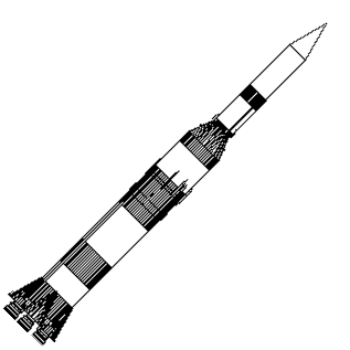 I can't think of a single SF writer who thought that the plan for humans exploring the solar system would look like this:
Step 1: Go the Moon
Step 2: Cut Budget, have your infrastructure dissolve for 34 years
Step 3: Wait for the global computer network infrastructure to develop
Step 4: Use a search engine to find all that data again
![]() A lot of the hard specs are out there on sites like astronautix.com, but when I look at the pictures on the web of the foot thick briefing books for Apollo, I yearn for a closer look.
A lot of the hard specs are out there on sites like astronautix.com, but when I look at the pictures on the web of the foot thick briefing books for Apollo, I yearn for a closer look.
Starting from the top of the Shuttle replacement's design - I like the return to a capsule. It works. The escape modes are appealing. It can't manuever worth a damn, but who cares.
Yet Europe and Russia are now touting a lifting body based design, called Kliper, which kind of blows my mind. I don't want to think about it. The Russian/Europeans seem to really have some grand plans for spaceflight. Ours is now the more mundane program. OK. I am convinced the current plans for the stick and the heavy lifter will work better than the shuttle ever has - but are the right choices being made?
Michael Griffin outclasses me by 7 degrees, but I can't help but question things like the choice of the 25 year old space shuttle main engines (SSME) for "the stick", rather than the less expensive, 80% lower part count, higher thrust (2.8 MN vs the SSME 1.8MN) RS-68.
Admittedly, as best as I can tell, both the SSME and the RS-68 are being considered for the second stage of the stick, and the RS-68 has had some teething problems.

Secondly, I like the use of a solid first stage but question the use of the existing shuttle part - I've never liked segmented solids and a rocket cast in one piece and floated to Canaveral makes more sense to me.
 It bugs me, a lot, that the Shuttle SRBs are the width they are because that's the maximum width a railroad car could take. Why didn't we build the solid rocket boosters in central florida? Politics.
The extra segment for the heavy lifter seems like a big risk.
That said, the existing SRBs do already have a manufacturing base, and it costs money to change that.
Thirdly, I wish that NASA had published the technical data and financial analysis behind the choice of developing a new man rated vehicle, rather than man rating something like the Delta V Heavy and closing more of the shuttle production lines.

Proponents of reusables tend to forget - one good way to reduce costs and lower risk over the cost of the program is to manufacture a lot and fly a lot, making incremental improvements. That's why I'm leary of the heavy lifter and the 2 launches per year model. Our heavy lifter program, as proposed, already looks like the B2 bomber program as it ended up.
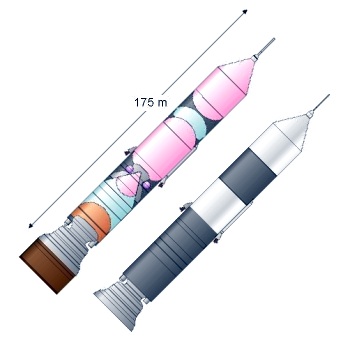
And, if you're going to build a heavy lifter, why not build a REALLY HEAVY LIFTER? I'd like to see, from internal memos, etc, why a design like Sea Dragon isn't feasible.
Still, looking at the two new designs, it's like some politician was given a bunch of parts and asked to re-assemble them without putting anyone on the unemployment line. All that said, it's all back seat carping for now, and damnit, probably, by reusing so many shuttle parts and production lines for both new designs, NASA really is saving time and money.
I'm no longer an advocate for SSTO, reusable vehicles. The staging approach gets the mostest there, fastest - but what are the operational costs beyond that first moon landing using the stick and heavy lifter? No one knows.
If it were up to me I'd outsource the manned program to the Russians and focus on building the heavy using tried and true Saturn V techniques. I'd also seriously think about just putting payloads on existing rockets wherever possible - stop inventing new rockets and just work on the spaceships and the asteroid bases. We're good at spaceships, and haven't tried for the asteroids yet.
I know that there are those who think we should have our own manned program for national prestige. I feel for them. I'd like to have one too. But I want us to fly more missions and more spacecraft far more than I want to waste US time and money in developing new rockets for that purpose. Ramp up the Russian production line for the manned flights.
Selenian Boondocks writes:
NASA should adopt more open source methods. Certainly, publishing on the web EVERY single paper study that they have ever paid for - starting now, but going all the way back to the 50s - would be a huge boon for the public, the engineering, and the science communities, that all want one thing - to be in space - a lot - and cheaply.
Also, publishing on the Net all the source code that controls the rockets would ensure, via Linus's law, that fewer semicolons - and targets - would be missed.
I can't think of a single SF writer who thought that the plan for humans exploring the solar system would look like this:Starting from the top of the Shuttle replacement's design - I like the return to a capsule. It works. The escape modes are appealing. It can't manuever worth a damn, but who cares.
Yet Europe and Russia are now touting a lifting body based design, called Kliper, which kind of blows my mind. I don't want to think about it. The Russian/Europeans seem to really have some grand plans for spaceflight. Ours is now the more mundane program. OK. I am convinced the current plans for the stick and the heavy lifter will work better than the shuttle ever has - but are the right choices being made?
Michael Griffin outclasses me by 7 degrees, but I can't help but question things like the choice of the 25 year old space shuttle main engines (SSME) for "the stick", rather than the less expensive, 80% lower part count, higher thrust (2.8 MN vs the SSME 1.8MN) RS-68.
Admittedly, as best as I can tell, both the SSME and the RS-68 are being considered for the second stage of the stick, and the RS-68 has had some teething problems.
Secondly, I like the use of a solid first stage but question the use of the existing shuttle part - I've never liked segmented solids and a rocket cast in one piece and floated to Canaveral makes more sense to me.
It bugs me, a lot, that the Shuttle SRBs are the width they are because that's the maximum width a railroad car could take. Why didn't we build the solid rocket boosters in central florida? Politics. The extra segment for the heavy lifter seems like a big risk.
That said, the existing SRBs do already have a manufacturing base, and it costs money to change that.
Thirdly, I wish that NASA had published the technical data and financial analysis behind the choice of developing a new man rated vehicle, rather than man rating something like the Delta V Heavy and closing more of the shuttle production lines.
Proponents of reusables tend to forget - one good way to reduce costs and lower risk over the cost of the program is to manufacture a lot and fly a lot, making incremental improvements. That's why I'm leary of the heavy lifter and the 2 launches per year model. Our heavy lifter program, as proposed, already looks like the B2 bomber program as it ended up.
And, if you're going to build a heavy lifter, why not build a REALLY HEAVY LIFTER? I'd like to see, from internal memos, etc, why a design like Sea Dragon isn't feasible.
Still, looking at the two new designs, it's like some politician was given a bunch of parts and asked to re-assemble them without putting anyone on the unemployment line. All that said, it's all back seat carping for now, and damnit, probably, by reusing so many shuttle parts and production lines for both new designs, NASA really is saving time and money.
I'm no longer an advocate for SSTO, reusable vehicles. The staging approach gets the mostest there, fastest - but what are the operational costs beyond that first moon landing using the stick and heavy lifter? No one knows.
If it were up to me I'd outsource the manned program to the Russians and focus on building the heavy using tried and true Saturn V techniques. I'd also seriously think about just putting payloads on existing rockets wherever possible - stop inventing new rockets and just work on the spaceships and the asteroid bases. We're good at spaceships, and haven't tried for the asteroids yet.
I know that there are those who think we should have our own manned program for national prestige. I feel for them. I'd like to have one too. But I want us to fly more missions and more spacecraft far more than I want to waste US time and money in developing new rockets for that purpose. Ramp up the Russian production line for the manned flights.
- Dear NASA:
Please build or buy something this time that you can fly a lot, or let someone else have the job.
Sincerely,
Michael Taht
Selenian Boondocks writes:
- ... for the amount they want to design and field the Stick and the Longfellow, they could buy 60 Delta IVH flights, 150 Atlas V flights, or nearly 540 (!) Falcon IX flights (if those become available). How on earth is NASA going to be cheaper, unless you ignore the $15B development cost and the $3B/year fixed costs?
Labels: ares, google, nasa, space, space05, vse
¶ 6:07 PM 0 comments
Thursday, August 11, 2005
I'm 40 today. Steve Wozniac's 55 - and 1 out of 365 other people in the world also have today as a birthday. It's just another day, right?
I've been in training for today for 3 years or so. It should be easy navigating emailed comments like this from an ex-gf - "So you're 40. Bought a walker yet?" Or Henry Rollins saying "You're aged, you're entering 'Eric Clapton Towntowntowntown'"....
I got up at 4AM to see if the Perseids were showering yet (saw two meteors. It's dark enough where I live, but my house faces the wrong way)
I worked on a song called Saturn's rings, with a sample of what they actually sound like. It needed a bridge. I got part of one, and went back to bed.
I dreamed I was in college again, except that this time I knew how to deal with women.
My first call this morning was from a bill collector.
I got out of bed and as far as the front door to find that my favorite ex-gf had sent sunflowers - that cheered me up enormously. I tried to call her. I got voicemail.
I got my first piece of blog spam yesterday - "Real Singles, at 99 cents a minute".
NASA was kind enough to delay the Mars Reconnaissance Orbiter to this morning (the only candle I wanted to see lit today!), but scrubbed the launch at the last minute. Weighing more than a ton before fueling and more than twice that with its tanks full, MRO is one of the biggest ships ever hurled towards Mars.
The day I was born, in 1965, there were five launches.
I've slowed down a lot, but not as much as NASA.
Second thing I read today - a an asteroid with two moons was just found - one big asteroid "Sylvia": "The density, 1.2 grams per cubic centimeter, is 20 percent higher than the density of water, which suggests it is composed of water, ice and rubble from a primordial asteroid, probably a hydrated carbonaceous chondrite, based on previous spectroscopic studies of the asteroid.
"It could be up to 60 percent empty space," said astronomer Daniel Hestroffer, one of three coauthors from the Institut de Mécanique Céleste et Calculs d'Éphémérides at the Observatoire de Paris."
Tomorrow (friday) the meteor storm should be in full swing and I plan to take my guitar and drums to the beach to urge them on down....
I thought I was just going to shave and go to work in a few moments, as always, my current project is under a heavy deadline, but unexpectedly I have other plans for today. At least I'm shaved...
My boss wrote me: Happy birthday Mike! So you are now both chronologically as well as physically over the hill.
I've been in training for today for 3 years or so. It should be easy navigating emailed comments like this from an ex-gf - "So you're 40. Bought a walker yet?" Or Henry Rollins saying "You're aged, you're entering 'Eric Clapton Towntowntowntown'"....
I got up at 4AM to see if the Perseids were showering yet (saw two meteors. It's dark enough where I live, but my house faces the wrong way)
I worked on a song called Saturn's rings, with a sample of what they actually sound like. It needed a bridge. I got part of one, and went back to bed.
I dreamed I was in college again, except that this time I knew how to deal with women.
My first call this morning was from a bill collector.
I got out of bed and as far as the front door to find that my favorite ex-gf had sent sunflowers - that cheered me up enormously. I tried to call her. I got voicemail.
I got my first piece of blog spam yesterday - "Real Singles, at 99 cents a minute".
NASA was kind enough to delay the Mars Reconnaissance Orbiter to this morning (the only candle I wanted to see lit today!), but scrubbed the launch at the last minute. Weighing more than a ton before fueling and more than twice that with its tanks full, MRO is one of the biggest ships ever hurled towards Mars.
The day I was born, in 1965, there were five launches.
I've slowed down a lot, but not as much as NASA.
Second thing I read today - a an asteroid with two moons was just found - one big asteroid "Sylvia": "The density, 1.2 grams per cubic centimeter, is 20 percent higher than the density of water, which suggests it is composed of water, ice and rubble from a primordial asteroid, probably a hydrated carbonaceous chondrite, based on previous spectroscopic studies of the asteroid.
"It could be up to 60 percent empty space," said astronomer Daniel Hestroffer, one of three coauthors from the Institut de Mécanique Céleste et Calculs d'Éphémérides at the Observatoire de Paris."
Tomorrow (friday) the meteor storm should be in full swing and I plan to take my guitar and drums to the beach to urge them on down....
I thought I was just going to shave and go to work in a few moments, as always, my current project is under a heavy deadline, but unexpectedly I have other plans for today. At least I'm shaved...
My boss wrote me: Happy birthday Mike! So you are now both chronologically as well as physically over the hill.
Labels: asteroids, mars, nasa, perseids, space, space05
¶ 10:24 AM 2 comments
Sunday, July 10, 2005
Shuttle launch payload constrained by orbital inclination
I get edgy when there's both a hurricane and a shuttle launch brewing. I try hard not to think about all the millions of parts that have to work perfectly to get Discovery and her crew to orbit, carrying 15 tons of equipment for the ISS.I sure wish we'd developed a pilotless version of the shuttle. The Soviets did, with the Buran, but they only flew it once. Now - the city government of Moscow is funding development of their own shuttle!
What's next? Los Angeles funding asteroid missions? New York developing a space traveling garbage barge?
I sure wish our politicians hadn't moved the orbit of the shuttle from one that was good for the US (26 degrees above the equator) to one that was good for Russia. (51.6 degrees above the equator). If ISS's orbit was more suitable we could haul twice the tonnage to the ISS at a time from our launch facilities in Canaveral.
... and if we'd put ISS where we'd intended Space Station Freedom - 29.6 degrees - we wouldn't have had two shuttle tank redesigns and we might not be short one shuttle and 7 crew.
"ISS is russian revenge for spending us broke with SDI" - anonymous Russian engineer
I just looked over a post of the space station budget from 1991, and I just have to sigh.
Who actually won the space race, anyway?
Why do we have to spend billions developing a spaceplane/shuttle replacement to get to LEO when we could just buy the rockets from the Russians and the French - and get on with the important stuff -
building craft to explore the worlds beyond earth orbit.
Labels: asteroids, gto, iss, nasa, orbits, solar system, space, space05, spacecraft
¶ 4:51 PM 0 comments
Saturday, November 13, 2004
Physics Geek: Great American Smokeout
Physics Geek: Great American Smokeout- Attention all smokers! Put the following date on your calendars: November 18. That is the day when smokers struggling to kick the habit can prove to themselves that it IS possible to quit smoking. How? By abstaining for a single day. Once you've accomplished that, try another day. Repeat as necessary.
Good luck, everyone. I have confidence that you can do it. Remember: it's just one day. You can do anything for one day."
1) For beginners: Start with 1 minute. Put the stogies across the room and tie your shoelaces together. It should take at least 60 seconds to retrieve a butt.
2) More advanced: Tie your cigarettes to a cinderblock and dump the whole kaboodle into the middle of Lake Superior. Dive into the lake sans breathing apparatus. If you can get your smokes back, you deserve 'em.
I more or less managed to quit smoking cigarettes a while back (I still bum them), but I picked up a tobacco pipe instead, which smells better and tastes better. Until today I justified still smoking the pipe because I love getting double takes from cops - "what the heck is that guy smoking?")
I also believe that smoking raises IQ by 5 points. Example - In the 60s, everyone in NASA smoked. Result: We got to the moon in 9 years. In the 00s, no one in NASA can smoke on duty. Result: We can't get back to the moon in less than 16 years.
I've just learned that even if I quit smoking that I'm still at least 14 IQ points smarter than either Bush or Kerry. I also scored 40 pts higher on the SATs than Al Gore. This proves to me that IQ is not a indicator of success in life or politics - that other factors, environment(Yale, marrying rich), heredity (the blue blood kind), discipline, and just plain luck - are far more important than IQ. Damn it.
So the smart thing is to quit smoking and clean up my immediate environment - and then start to hang around places like Yale.
I've got to put 7 more years, dumber, on the tail end of my life if I want to get to the asteroids. ¶ 3:01 PM 0 comments
Monday, February 23, 2004
Want to see me get mad about money misspent? Read on. I want to talk about the incredible cost-effectiveness of NEOX based space missions after I get done being pissed off about this:
38 billion dollars spent over 20 years to not produce a single operational aircraft. That kind of money would pay for roughly 5000 NEOX missions, each visiting 4 asteroids, or more, in a quest for raw material, and information, laying the groundwork for a network of telescopes, radar and observing stations well beyond earth's orbit - and potentially opening the solar system to human colonization. Each impact probe would give us so much more detail on what conditions were like...
The thing I am maddest about today - is that the only thing the press seems to pick up on is the one in half a million chance that one rock will hit earth - it's not just that -
 It is in the 0 chance that I will ever get to live on one of these rocks - hitch a lift past earth, through the Belt, up to Jupiter, and back to Venus. It would be a wonderful 4 year trip - it would be a wonderful trip to make multiple times...
I see each of the thousands of near earth asteroids as opportunity - as real estate on the hoof - as a place where greenpeace isn't running around in little rubber boats - I see the former swamplands of florida in only 70 years of development covered with retirement homes... and I see Toutatis: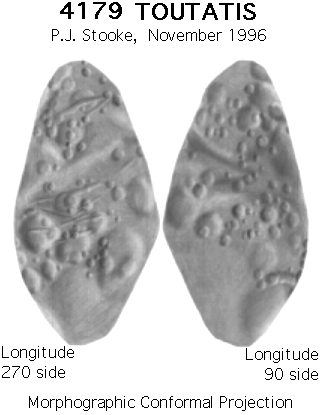 Toutatis - where I want to retire. While it isn't much to look at now, neither was the swampland in florida 70 years ago. See that cute little dimple in the center? That is over 600m in diameter - right on the edge of that, I think, would be a good place for a near-zero-g-hottub with an everchanging view.... The pictures may be small, but we are talking about kilometers of land, and billions of tons of raw material here.
The only way to get there is to make it pay, to make it possible to bring resources from space - and the only way I can think of to do that is to bootstrap it with an enormous number of tiny spacecraft launches each on a mission to survey a different set of asteroids, to find sources of water, metals, and the essentials of life - and to establish an effective relay network for communication between all these craft - and... and... I start to sputter about stupid and wasteful it is to spend money on a helicopter designed to counter a non-existent threat - I rant about how if we only just took a step back and looked at the solar system, as a whole, from space, rather than from earth - we'd understand that the answers were already in our grasp -
It is not science fiction anymore, and, compared with most government programs - is cost effective with a potentially astronomical rate of return -
From the article that started all this matrix-y thinking:
you can have A, or B -
but if you start jumping up and down crying out for another option, a risky venture with an incredibly high rate of return...
just look up, on Asteroid Appreciation Day, February 29th - and visualize looking back on this green marble from the front porch of your very own digs on your own chunk of land.
- Feb. 23 (Bloomberg) -- The U.S. Army plans to cancel the Boeing Co.-United Technologies Corp. Comanche helicopter program, according to people familiar with the plan.
The program has been overhauled six times in its 18-year history as the cost per helicopter grew. The U.S. Army was ordered in 2002 to reduce the number of Comanche helicopters it planned to buy to 650 from 1,207. Initially, it planned to buy 2,000.
``The Comanche program was overtaken by new threats and new technologies,'' said Loren Thompson, a defense analyst for the Washington-based Lexington Institute. ``After 20 years of development, it had yet to produce an operational helicopter.''
The value of the contract was raised to $6.6 billion from $3.2 billion under a revised development contract awarded in November 2002. That contract calls for the venture to deliver nine Comanche helicopters in 2005 and 2006 for test and evaluation improvements through 2011, according to United Technologies' annual filing with the U.S. Securities and Exchange Commission.
The program's total budget for the Comanche is $38.3 billion [bold by yours truly]. The Army has spent $6.8 billion through Sept. 30. The fiscal 2005 budget asks $1.2 billion for research and development and just $12 million for procurement. The procurement request is $2 billion in 2009.
38 billion dollars spent over 20 years to not produce a single operational aircraft. That kind of money would pay for roughly 5000 NEOX missions, each visiting 4 asteroids, or more, in a quest for raw material, and information, laying the groundwork for a network of telescopes, radar and observing stations well beyond earth's orbit - and potentially opening the solar system to human colonization. Each impact probe would give us so much more detail on what conditions were like...
The thing I am maddest about today - is that the only thing the press seems to pick up on is the one in half a million chance that one rock will hit earth - it's not just that -
It is in the 0 chance that I will ever get to live on one of these rocks - hitch a lift past earth, through the Belt, up to Jupiter, and back to Venus. It would be a wonderful 4 year trip - it would be a wonderful trip to make multiple times...I see each of the thousands of near earth asteroids as opportunity - as real estate on the hoof - as a place where greenpeace isn't running around in little rubber boats - I see the former swamplands of florida in only 70 years of development covered with retirement homes... and I see Toutatis:
Toutatis - where I want to retire. While it isn't much to look at now, neither was the swampland in florida 70 years ago. See that cute little dimple in the center? That is over 600m in diameter - right on the edge of that, I think, would be a good place for a near-zero-g-hottub with an everchanging view.... The pictures may be small, but we are talking about kilometers of land, and billions of tons of raw material here.The only way to get there is to make it pay, to make it possible to bring resources from space - and the only way I can think of to do that is to bootstrap it with an enormous number of tiny spacecraft launches each on a mission to survey a different set of asteroids, to find sources of water, metals, and the essentials of life - and to establish an effective relay network for communication between all these craft - and... and... I start to sputter about stupid and wasteful it is to spend money on a helicopter designed to counter a non-existent threat - I rant about how if we only just took a step back and looked at the solar system, as a whole, from space, rather than from earth - we'd understand that the answers were already in our grasp -
It is not science fiction anymore, and, compared with most government programs - is cost effective with a potentially astronomical rate of return -
From the article that started all this matrix-y thinking:
- ``The most directly competing programs in the Army are Apache and Comanche,'' Aboulafia said. ``Which would you rather have - 100 percent of a proven machine with good profit, or 50 percent of a risky venture?''
you can have A, or B -
but if you start jumping up and down crying out for another option, a risky venture with an incredibly high rate of return...
just look up, on Asteroid Appreciation Day, February 29th - and visualize looking back on this green marble from the front porch of your very own digs on your own chunk of land.
Labels: asteroids, comanche, nasa, neox, retirement, space, space04
¶ 11:19 PM 0 comments
Wednesday, January 14, 2004
Presidential Priorities in space...
I am told that that "vision thing" is happening again... that today, President Bush is supposed to announce plans to return to the moon and put a man on Mars.I have sort of been aware of this for a long time, and have been doing my best to ignore it. I have enough problems in my life right now... what happens in space is very far away when getting the mortgage paid is my principal concern.
I look forward to reading his speech, though, and reading more about what the actual proposals look like. Maybe there will be a surprise in there... Maybe there will be a slice of the pork left over for asteroid exploration, who knows?
Bonus Link: No Oil on the moon. While I don't agree with the author on (most) points, I AM interested to see how closely his analysis of the justifications for space exploration will be in the speech. It is also not amusing, to me, to see the author drag out the same reasons, yet again, for not exploring space.
It is such an old argument. I am tired of it. So tired...
Update 2:48 PM - I read Bush's speech... I'm so tired... an extra billion for NASA, woopdedoo. Here, NASA, let me write you a check for five bucks, personally. It's the best I can do. (I owe a couple hundred bucks to the government for the war in Iraq, but I am a little behind on my taxes)
Hey, Prez! Did you know that for less than 100mil you could get a spacecraft like the Falcon - unveiled in front of the smithsonian last week - Oh... I take it you were in meetings that day?
To add to today's tale of discouragement read about what happened the last time private industry tried to get into space instead of NASA.
And all this time I thought republicans were the bastions of private industry....
Labels: nasa, space, space04, vse
¶ 2:48 PM 0 comments


